
Back
Claire Walsh, EAL Coordinator, cwalsh@bohunt.hants.sch.uk
Katie Green, Student Champion, studentchampion@bohunt.hants.sch.uk
Danielle Williams, Student Champion, studentchampion@bohunt.hants.sch.uk
Bohunt Liphook School Data for EAL (data collected May 2025)
1871 students on roll
201 students recorded as using EAL 2024-2025
40 different languages spoken by pupils at our school
21 students receiving targeted support interventions
What is English as an Additional Language (EAL) support?
Pastoral: Social & Welfare support = Belonging
Academic: English, Maths, Science = Progressing
Cooperation with subject teachers to co-teach:
● Key subject vocabulary and the 4 skills.
● Revision of current class content and concepts.
● Regular Assessment to understand & plan support.
How we identify and assess EAL speakers
The Bell Foundation – EAL Assessment Framework
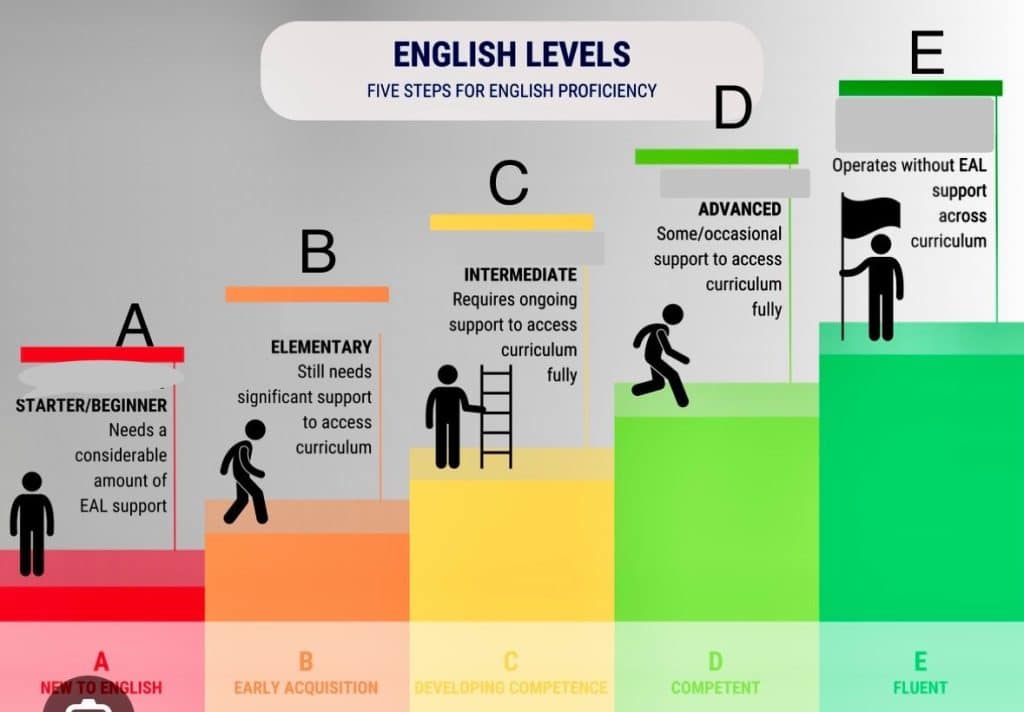
We use the Bell framework to track your child’s progress in developing English.
•Band A: Beginner EAL learners to
•Band E: Fluent EAL learners
It can take between 7 and 10 years for a child to become a fully proficient user of English.
Should my child maintain their first language?
Yes. Children who maintain their first languages have key advantages:
• in acquiring additional languages, including English at all levels.
• in decision making, problem solving, multi-tasking and cognitive flexibility
Keeping first language going helps maintain links with family members and cultural heritage, as well as building cultural identity.
How can I help my child with their reading?
You can help your child with school reading even if you don’t think your English is very good. Read first language, dual language, simplified books and graphic novels. Talk about the book in first language and/or English. Ideas to touch on include:
What can you do at home to support your child’s overall learning?
Take time to look at your child’s homework. Your child can translate key ideas into first language and discuss them with you. Share your ideas with your child in your first language. Try to avoid Chat GPT or copying lots of work from the internet. Your child’s teachers need to build a true picture of their ability to tailor their learning
Attend any school meetings so you can keep up to date with your child’s progress. If you are unsure about what it is being said, ask for help.
What translation apps do we use at school?
Microsoft Translate

Google Translate


